Consultant Cosmetic Rhinoplasty & Sinus Surgeon In Fareham & Winchester, Hamps
Please find below some other nasal conditions and surgeries that I peform regularly, both within the NHS and at
Medicana Winchester Hospital & Wessex Nuffield



Septoplasty = This is a procedure to straighten the middle partition of the nose. It is undertaken through a small cut on the inside of the nostril. It is a procedure to improve nasal breathing. It will not alter the outside shape of the nose.
It is often combined with a turbinoplasty, to trim the internal 'fin-like' structures on the inside of the nose to further benefit breathing.


Chronic rhinosinusitis is a condition where the sinuses (the air-filled spaces behind your cheeks, nose, and forehead) become inflamed and blocked for more than 12 weeks. This can cause symptoms like a blocked nose, facial pressure, loss of smell, and thick nasal discharge. It often happens due to allergies, infections, or nasal polyps. When medications like nasal sprays, tablets, or rinses don’t help enough, sinus surgery may be recommended. This is undertaken through the nose using a camera (endoscopic sinus surgery) to open the blocked sinuses, clear infection or polyps, and help you breathe and feel better.


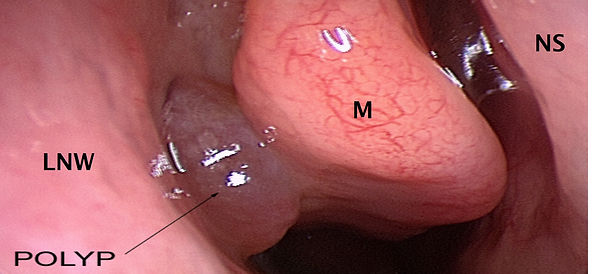
Nasal polyps are soft, painless growths that develop inside the nose or sinuses due to long-term inflammation. They often look like small grapes or swellings and can block the nose, making it hard to breathe, smell, or sleep properly. Polyps are not cancerous, but they can keep coming back, especially in people with asthma, allergies, or chronic sinus problems. Treatment usually starts with steroid nose sprays or tablets to shrink the polyps. If symptoms don’t improve, surgery may be needed to remove them and clear the sinuses.
Post-nasal drip happens when too much mucus builds up in the nose or sinuses and drips down the back of the throat. This can make your throat feel tickly or sore, cause coughing (especially at night), or give you a constant need to clear your throat. It’s often caused by colds, allergies, sinus infections, or irritants like smoke or pollution. Treatment depends on the cause and may include nasal sprays, antihistamines, saline rinses, or treating any underlying infection or allergy.

ClariFix is a minimally invasive treatment designed for patients with chronic rhinitis or persistent post-nasal drip that hasn’t responded to standard medical therapy. It works by applying controlled cryotherapy (cold therapy) to the posterior nasal nerve at the back of the nose, a key nerve that helps regulate mucus production. By gently freezing this area, ClariFix reduces the overactive nerve signals that cause excessive nasal mucus and congestion. The procedure is quick, performed under a quick general anaesthetic, and most patients experience only mild discomfort. Improvement in post-nasal drip, congestion, and runny nose symptoms typically develops over several weeks as the nasal lining settles.
Posterior nasal nerve (PNN) surgery is a treatment for persistent rhinitis symptoms, particularly a constantly runny nose, post-nasal drip and nasal congestion. The posterior nasal nerve carries some of the nerve signals that stimulate the lining of the nose to produce mucus and become congested. In patients with chronic rhinitis, these signals can be overactive. PNN surgery aims to reduce this excessive nerve signalling and therefore reduce nasal secretions and improve symptoms.
PNN surgery is a little more extensive than ClariFix, but it is still performed entirely through the nostrils using an endoscope, so there are no cuts or scars on the outside of the nose. During the procedure, the posterior nasal nerve is identified and divided, and a small graft is placed over the treatment area. The operation usually takes around one hour. One advantage of performing this as a surgical procedure is that other causes of nasal blockage can be treated at the same time. For example, enlarged turbinates can be reduced with a turbinoplasty, and a deviated nasal septum can be corrected with a septoplasty if required.
PNN surgery is intended to provide a more long-lasting reduction in symptoms than treatments such as ClariFix, and clinical studies suggest that surgical PNN treatment has a relatively high likelihood of producing a meaningful improvement. Approximately 75–80% of appropriately selected patients can expect a significant improvement in their symptoms. It is important, however, to understand that the aim is to reduce excessive nasal secretions rather than stop them completely. No treatment can guarantee that a runny nose or post-nasal drip will disappear entirely, and some mucus production is normal and necessary to keep the lining of the nose healthy and moist.

Allergic rhinitis, also known as hayfever, is when your immune system overreacts to things like pollen, dust mites, animal dander, or mould. This causes symptoms like a runny or blocked nose, sneezing, itchy eyes, and post-nasal drip. It can happen seasonally (especially in spring and summer with pollen) or all year round. Although it’s not dangerous, it can affect sleep, concentration, and quality of life. Treatment includes antihistamines, steroid nasal sprays, saline rinses, and avoiding triggers when possible. Surgery can occasionally be indicated if structural abnormalities in the nose are contributing towards poor medication delivery (e.g. deviated septum or large obstructing turbinates).